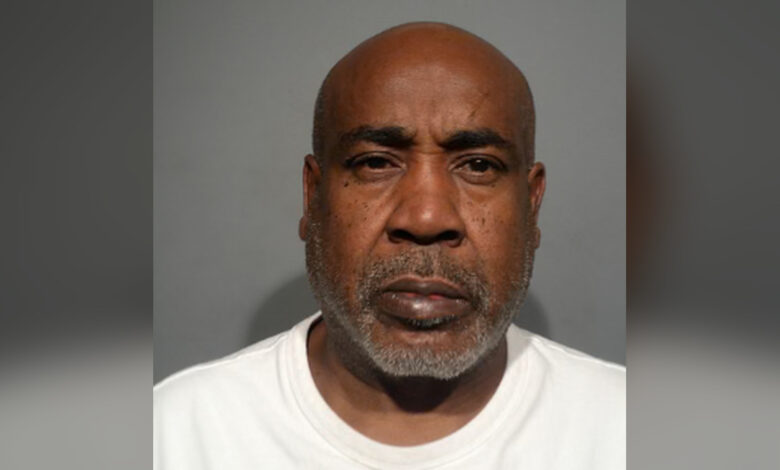
Duane “Keffe D” Davis receives a lengthy prison sentence for orchestrating the 1996 Las Vegas shooting of the legendary rapper. Tupac’s family confronts the convicted killer as his attorneys prepare to appeal.
By A.T.L. N.E.W.S. Staff | October 13, 2026
NATIONAL NEWS | ENTERTAINMENT | CRIME & JUSTICE
LAS VEGAS, Nev. — Nearly three decades after rapper Tupac Shakur was fatally shot on the Las Vegas Strip, one of hip-hop’s most enduring murder cases has reached a historic sentencing milestone.
Duane Keith Davis, better known as “Keffe D” or “Keefe D,” was sentenced Tuesday to 40 years to life in prison for orchestrating the September 1996 drive-by shooting that killed the 25-year-old rapper, actor and cultural icon.

The sentence, imposed by Clark County District Court Judge Carli Kierny, follows Davis’ August 31 conviction for first-degree murder with a deadly weapon. The 63-year-old former South Side Compton Crips leader was the only person ever criminally charged in connection with Shakur’s killing, a case that frustrated investigators and fueled speculation for nearly 30 years.

According to Reuters, prosecutors established that Davis played a central role in organizing the retaliatory attack, even though he was not accused of personally firing the shots that killed Shakur.
A Murder That Haunted Hip-Hop for Three Decades
The events leading to Shakur’s death began on the evening of September 7, 1996, when the rapper attended a Mike Tyson boxing match at the MGM Grand in Las Vegas.
Following the fight, Shakur and members of his entourage became involved in an altercation with Orlando “Baby Lane” Anderson, a member of the South Side Compton Crips and Davis’ nephew. Prosecutors argued that the confrontation provided the motive for a retaliatory shooting later that night.
Shakur subsequently left the MGM Grand in a black BMW driven by Death Row Records co-founder Marion “Suge” Knight. As the vehicle stopped near the intersection of Flamingo Road and Koval Lane, a white Cadillac pulled alongside it, and an occupant opened fire.
Shakur was struck multiple times. Knight suffered comparatively minor injuries and survived.
The rapper was rushed to University Medical Center of Southern Nevada, where doctors worked to save his life. He died September 13, 1996, six days after the shooting, at just 25 years old.
His death sent shockwaves through the entertainment industry and intensified concerns about violent rivalries surrounding some of the biggest names in rap music.
The murder remained unsolved for decades despite numerous investigations, documentaries, interviews and competing theories about who was responsible.
Keefe D’s Own Statements Helped Build the Prosecution’s Case
One of the most significant developments in the decades-long investigation came from Davis himself.
Over the years, Davis discussed the shooting in interviews and eventually published a 2019 memoir, Compton Street Legend, in which he described his presence inside the white Cadillac involved in the attack.
His public accounts became increasingly important to investigators, who used them alongside other evidence to reconstruct the shooting and establish his alleged role in organizing the retaliation.
Davis previously maintained that he was present during the killing but did not personally shoot Shakur. Prosecutors argued that his involvement extended beyond simply being a passenger, alleging that he helped arrange the attack and provided the weapon used.
Under Nevada law, a person who assists or participates in planning a murder can be held criminally responsible even when another individual fires the fatal shots.
Davis was arrested in September 2023 after investigators revived the case and presented evidence to a grand jury.
Throughout the legal proceedings, he maintained his innocence. His defense argued that some of his earlier statements were exaggerated or fabricated to generate publicity and financial opportunities. However, jurors rejected those arguments and convicted him in August 2026.
A.T.L. N.E.W.S. previously followed the case in its August 10 report, “Keefe D Stands Trial in Las Vegas for the 1996 Murder of Tupac Shakur.”
That earlier report examined Davis’ appearance before a Las Vegas jury, the prosecution’s allegations and the extraordinary circumstances surrounding a murder case that had remained unresolved for nearly three decades.
Tupac’s Family Confronts Convicted Killer in Court
Tuesday’s sentencing hearing brought emotional testimony from members of Shakur’s family, who described the lasting personal consequences of losing a brother whose life and career were cut short.
Shakur’s sister, Sekyiwa Shakur, addressed the court and urged the judge to impose the maximum available punishment. She reflected on her brother not simply as an internationally recognized entertainer but as a family member whose death robbed loved ones of decades they could have shared with him.
His stepbrother, Maurice “Mopreme” Shakur, also spoke about the profound impact of the killing and the years the family spent waiting for accountability.
Their statements emphasized the difference between Tupac Shakur’s public legacy and the private grief that continued long after his music became part of American cultural history.
Judge Kierny acknowledged the magnitude of that loss in her remarks to Davis, emphasizing that Shakur had been deprived of his future and that his family had endured the consequences for 30 years.
The courtroom proceedings represented one of the few opportunities for Shakur’s surviving relatives to directly confront someone convicted of responsibility for his death.
According to People, family members offered emotional statements during the hearing while prosecutors argued that Davis should receive a sentence reflecting the seriousness of his actions.
Forty Years to Life: What the Sentence Means
Davis’ sentence carries a minimum prison term of 40 years before he becomes eligible to seek parole. Judge Kierny also awarded him credit for approximately 731 days already spent in custody.
At 63 years old, Davis faces the possibility of spending the remainder of his life behind bars.
His sentence does not mean he will automatically be released after 40 years. Parole eligibility would depend on the applicable sentencing requirements and any future decision by Nevada’s parole authorities.
The defense has already indicated that it intends to appeal the conviction. Attorney Michael Sanft maintains that Davis was wrongly convicted and has challenged the prosecution’s reliance on his client’s previous public statements.
Although Tuesday’s sentencing marks a major development in the criminal proceedings, those planned appeals mean the legal dispute is not necessarily over.
As reported by KTNV Las Vegas, Davis and his attorney remained adamant after sentencing that they would seek to overturn the conviction.
Tupac’s Influence Continues Three Decades After His Death
While the criminal case has drawn renewed attention to Shakur’s final days, his legacy extends far beyond the circumstances of his death.
Born in New York City in 1971, Tupac Amaru Shakur emerged as one of the most influential voices in American hip-hop during the early 1990s. His music frequently examined poverty, police brutality, racial inequality, violence and the experiences of young Black Americans navigating difficult social environments.
Albums such as Me Against the World and All Eyez on Me established him as a major figure in popular music, while songs including “Dear Mama,” “Changes” and “Keep Ya Head Up” continue to resonate with listeners decades after their release.
Shakur also developed an acting career, appearing in films including Juice and Poetic Justice.
His public image was often shaped by controversy, legal troubles and the increasingly hostile rivalry between East Coast and West Coast hip-hop figures. Yet his work also reflected political awareness, emotional vulnerability and an interest in the conditions affecting marginalized communities.
He was inducted into the Rock & Roll Hall of Fame in 2017, and his recordings have continued reaching new generations through streaming platforms, documentaries and cultural retrospectives.
For many fans, Shakur’s killing symbolized not only the loss of an extraordinary talent but also the devastating consequences of violence that affected the entertainment industry during the 1990s.
His death was followed six months later by the fatal shooting of Christopher Wallace, better known as The Notorious B.I.G., in Los Angeles in March 1997. The two murders became defining tragedies of the era.
A Major Legal Milestone, but Questions Remain
Davis’ sentencing brings a measure of criminal accountability to a case that once appeared unlikely to produce a conviction.
For investigators, the verdict represented the culmination of years spent examining conflicting accounts, pursuing evidence and evaluating statements made by individuals connected to the shooting.
For Shakur’s family, the sentence provides a judicial acknowledgment of the responsibility established by the jury, although no prison term can restore the decades the family lost with him.
Questions about the precise actions of every participant in the 1996 attack remain part of the historical record. Prosecutors have not established through a separate conviction the identity of the person who fired the fatal shots, and the other three men investigators linked to the Cadillac have since died.
The conviction nevertheless establishes Davis’ criminal responsibility for organizing the murder under Nevada law, subject to the appeals process.
Thirty years after the gunfire that ended Tupac Shakur’s life, the legal system has delivered a significant judgment in one of music history’s most closely followed homicide investigations.
For the millions who continue listening to Shakur’s recordings, the sentence marks another chapter in a story that has long extended beyond a Las Vegas intersection.
And for his surviving family members, the proceedings have brought a long-awaited measure of accountability for the killing of a son, brother and artist whose life ended at 25.
RELATED A.T.L. N.E.W.S. COVERAGE: Keefe D Stands Trial in Las Vegas for the 1996 Murder of Tupac Shakur — August 10, 2026
A.T.L. N.E.W.S. will continue following developments in Davis’ expected appeal and the continuing legal proceedings connected to Tupac Shakur’s murder.