Dutch Court sentences father, brothers to decades in prison for Ryan Al Najjar’s “Honor Killing”
18-year-old Syrian refugee murdered by family after TikTok video sparked fury over 'Western lifestyle'

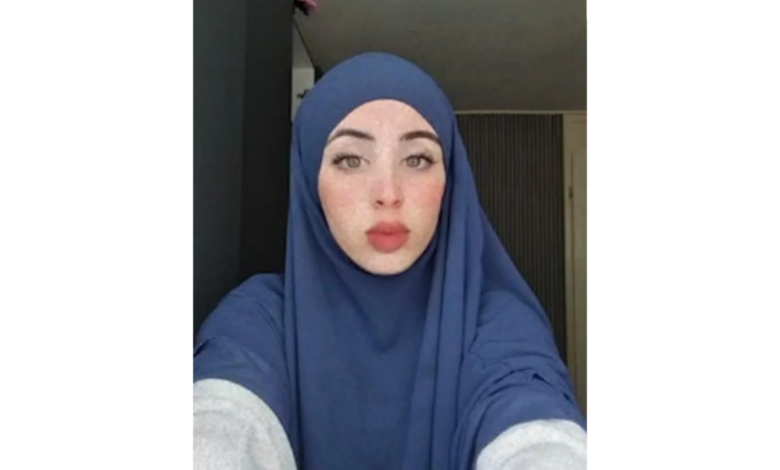
18-year-old Syrian refugee murdered by family after TikTok video sparked fury over Western lifestyle
The murder of 18-year-old Syrian refugee Ryan Al Najjar has become one of Europe’s most harrowing recent examples of so-called “honor killing.” Her case exposes how gender-based violence can follow young women even after they reach supposed safety in the West. On January 4, 2026, a Dutch court in Lelystad sentenced her father and two brothers to decades in prison for the brutal killing. Advocates say Ryan’s case reveals how institutions continue to fail women trying to escape family control.
Teenager killed after seeking freedom
Ryan Al Najjar disappeared from her family’s home in Joure, in the Dutch province of Friesland, on May 22, 2024. Six days later, a forest worker found her body in the water near the Knardijk in the Oostvaardersplassen nature reserve, close to Lelystad. Tape bound her wrists and ankles. Her head was wrapped and gagged. An autopsy showed she died by drowning while still alive.
Authorities say Ryan fled Syria as a child and grew up in the Netherlands. She had increasingly tried to live like her Dutch peers. This included having a boyfriend, appearing on social media, and sometimes going without a headscarf. Police and youth-care files show she repeatedly reported threats and violence at home. Authorities provided police protection and placed her in care facilities in the years leading up to her killing.
A TikTok video that “shamed” the family
Dutch prosecutors say the immediate trigger for the murder was a TikTok livestream. In the video, Ryan appeared without a headscarf, wearing makeup, and mentioned herself and family members by name. Investigators recovered internal family messages. These messages show relatives calling the video a disgrace. They discussed how Ryan’s behavior cost them “face” in their community.
Court documents and prosecution statements describe a pattern of escalating control. Ryan’s father, 53-year-old Khaled al-Najjar, and her brothers condemned her “Western lifestyle.” This included socializing with men, rejecting an arranged marriage, and asserting independence. Dutch media and the Public Prosecution Service cite one text from a brother. He wrote that if Ryan was “lying and causing us to lose even more face, she must be punished.” Other messages explicitly suggested she should be killed.
Lured, bound and drowned
Investigators say Ryan’s brothers Mohamed and Muhanad picked her up from a location in Rotterdam on the night of the murder. They drove her to the isolated Knardijk area. Their father joined them shortly after midnight. Location data from phones and step counters placed all three men and Ryan walking the same route toward the water. This matched stairs along the embankment that lead down to the pool where investigators later found her body.
Prosecutors told the court that attackers used about 18-20 meters of adhesive tape to bind Ryan’s wrists and legs and wrap her head. They then threw her into shallow water and left her to drown. Investigators found DNA traces from her father under her fingernails and on the tape. They discovered a fingerprint from one brother on her phone case, which had been stuffed into her shoe.
Father flees, court hands down long sentences
After Ryan’s death, Khaled fled first to Turkey and then to northern Syria, where he remarried. He later sent letters to Dutch media claiming he alone killed his daughter and that his sons were innocent. Prosecutors rejected that narrative. They pointed to digital communications in which the brothers discussed methods of killing their sister. These included poisoning her with a plant. The messages show they coordinated with their father before and after the crime.
In November 2025, the Public Prosecution Service demanded up to 25 years for the father and 20 years for each brother. They called the killing “a form of femicide” and “completely unacceptable.” On January 4, 2026, a court in Lelystad sentenced Khaled in absentia to 30 years in prison. The court imposed 20-year terms on Mohamed and Muhanad. They were convicted for their roles in Ryan’s murder and destroying evidence. This included deleting photos, videos and chats from her phone.
A warning for Europe — and beyond
Dutch authorities have labeled the case a so-called “honor killing.” In such cases, relatives murder a woman because they believe her behavior has brought shame to the family. This phenomenon occurs across parts of the Middle East and South Asia. It also appears within some diaspora communities in Europe. Human-rights groups say Ryan’s death shows that “honor”-based violence is not a distant problem. It can emerge inside refugee families and slip through gaps in Western protection systems. This happens even when police and social services are already involved.
Advocates are using her case to push for stronger, specialized responses to honor-related threats. This includes better training for frontline workers. It also means closer coordination between police and youth-care agencies. They seek more secure options for young women seeking to break with family norms. For many watching from Atlanta to Amsterdam, Ryan Al Najjar’s story is now a symbol. It represents the dangers faced by girls who defy violent patriarchy. It also highlights the urgent need to ensure that when they ask for help, systems do not let them down.