Understanding the push for mandatory ethics and transparency in the federal courts.
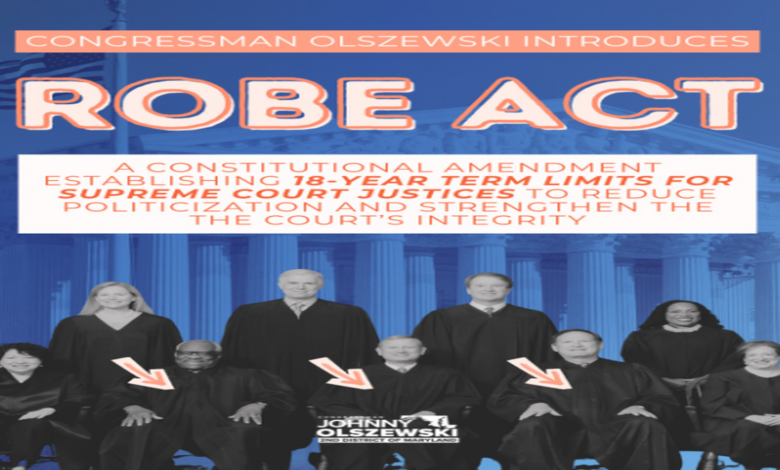
In an era where the intersection of ethics and governance is under intense public scrutiny, Congressman Johnny Olszewski has introduced a legislative proposal aimed at the highest levels of the American legal system. Known as the ROBE Act (Restoring Objectivity and Binding Ethics), the bill seeks to codify a formal code of conduct for the federal judiciary, with a specific focus on the United States Supreme Court.
The Core Objectives of the ROBE Act
The legislation is designed to address what Olszewski describes as a “crisis of confidence” in the nation’s courts. While lower federal courts are bound by a code of conduct, the Supreme Court has historically operated under its own internal guidelines.
The ROBE Act focuses on three primary pillars:
- Binding Ethics Standards: Transitioning from voluntary guidelines to a mandatory, enforceable code of ethics for all federal justices.
- Financial Transparency: Tightening requirements for disclosing gifts, travel, and outside income to prevent potential conflicts of interest.
- Recusal Clarity: Establishing formal mechanisms and public explanations for when a justice must recuse themselves from a case.
Why Now?
The introduction of the ROBE Act comes at a time of heightened political polarization. Recent reports regarding undisclosed gifts and luxury travel among members of the judiciary have fueled a national debate over whether the current system of “self-policing” is sufficient.
“Public trust is the currency of our judicial system,” Olszewski stated during the bill’s introduction. “Without transparency, that currency is devalued, and the rule of law is weakened.”
Legislative Challenges and Support
The bill faces a complex path through Congress. Supporters argue that the ROBE Act is a common-sense measure to ensure that no official, regardless of their lifetime appointment, is above accountability. They view it as a necessary check and balance to preserve the integrity of the bench.
Conversely, critics of the act raise concerns regarding the Separation of Powers. Some legal scholars argue that Congress may lack the constitutional authority to dictate internal rules for a co-equal branch of government. There are also fears that such a mandate could be used as a political tool to pressure justices based on their rulings rather than their conduct.