Iranians cheer Khamenei’s death as polls show mosst Americans reject U.S. strikes on Iran
Recent U.S. strikes on Iran have ignited a stark divide in Atlanta, where jubilant Iranian exiles celebrate the death of Supreme Leader Ayatollah Ali Khamenei while national polls show most Americans oppose the escalating war.
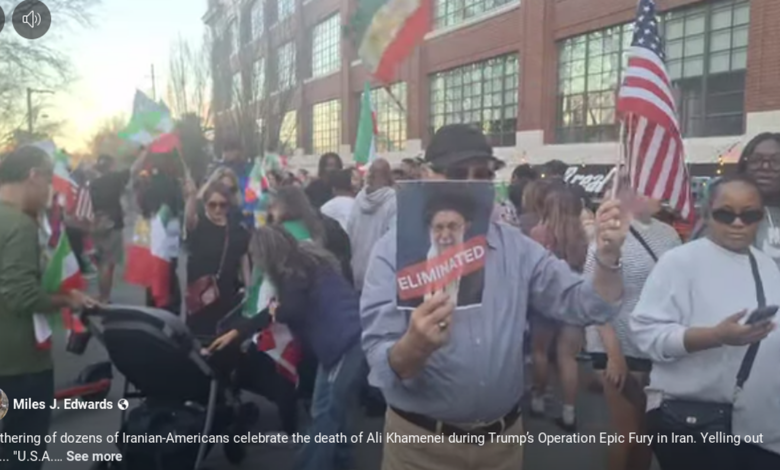
A video shared widely on Facebook captured dozens of Iranian-Americans along Atlanta’s BeltLine erupting in cheers Saturday evening, waving pre-revolutionary flags, and chanting in joy after President Donald Trump confirmed Khamenei’s death in a joint U.S.-Israeli strike. The scene, showing crowds dancing and hugging amid traffic, reflects a pocket of approval amid broader disapproval, with some participants telling reporters it marked the end of decades of oppression. Just blocks away, protesters rallied against the strikes, labeling them a repeat of past U.S. missteps in the Middle East and warning of endless escalation.
Polls conducted in the strike’s aftermath reveal only about 25% of Americans support the attacks on Iran, with roughly half disapproving and the rest uncertain or opposed.
Even among Trump voters, a significant share expressed reluctance for military action, according to surveys by The Washington Post and others, highlighting a rare fracture in public backing.
Critics argue the strikes risk broader war without clear strategy, echoing sentiments from Atlanta demonstrators who called for diplomacy over bombs.
Dr. Sasan Tavassoli, an Atlanta pastor born in Iran, said he’s waited 20 years for this news, calling Khamenei “a very evil dictator and a very oppressive tyrant” responsible for tens of thousands of deaths.
Shohreh Mir, another local Iranian-American, stressed a preference for internal regime change: “We still very much would like for Iranian people to change the regime by themselves,” viewing the strike as an “imposed war.”
Tavassoli noted no clear successor exists for Khamenei, predicting regime crisis but cautioning that “the Iranian diaspora celebrations have spread nationwide, with videos showing similar scenes in schools and streets, fueled by hopes of a freer homeland. Yet in Atlanta—a hub for Georgia’s Iranian community—the mix of BeltLine joy and protest chants underscores America’s fractured view on a conflict that could define the year. As retaliations mount, local voices like Tavassoli warn of bloodier days ahead, urging focus on Iran’s internal fractures over prolonged U.S. involvement.