


Part 2: The South Side Connection: Keefe D, Bad Boy Entertainment, and the West Coast Network
Editorial & Legal Disclaimer: This article is Part 2 of a seven-part investigative and historical commentary series examining public records, police filings, witness statements, and court transcripts surrounding the September 1996 shooting of Tupac Shakur. All individuals mentioned in connection with uncharged criminal activity or ongoing legal proceedings are presumed innocent unless proven guilty in a court of law. Allegations referenced regarding uncharged parties are sourced directly from law enforcement affidavits, grand jury indictments, and recorded police proffer sessions.
Long before his September 2023 arrest and murder indictment by Clark County authorities, Duane “Keefe D” Davis occupied a unique and influential position at the intersection of Southern California street culture and the emerging commercial empire of hip-hop.
A high-ranking leader of the South Side Compton Crips, Davis operated in circles that connected neighborhood street networks with the high-stakes entertainment industry. As East Coast hip-hop labels expanded their footprint into Los Angeles during the early 1990s, local figures like Davis provided the vital infrastructure required for corporate artists navigating the West Coast: physical security, venue access, vehicle fleets, and street-level protection.
It was within this context that Keefe D built a working relationship with Sean “Diddy” Combs, the founder of Bad Boy Entertainment.
Theory 2: The Bad Boy Logistics & Security Connection
The relationship between Duane “Keefe D” Davis and Sean Combs traces back to the early 1990s, when Bad Boy Entertainment was establishing its presence as a powerhouse label.
According to investigative reports, LAPD homicide records, and Keefe D’s own recorded statements under federal proffer agreements, Bad Boy executives regularly utilized Davis and his associates for logistical support whenever their roster traveled to Southern California.
When Bad Boy artists, including a young Usher during his early development, flew to Los Angeles for music video shoots, media appearances, or promotional tours, Keefe D provided rental vehicles and executive security services. Davis’s crew ensured safe passage through territorial neighborhoods, handled transportation fleets, and managed venue security during high-profile industry gatherings.
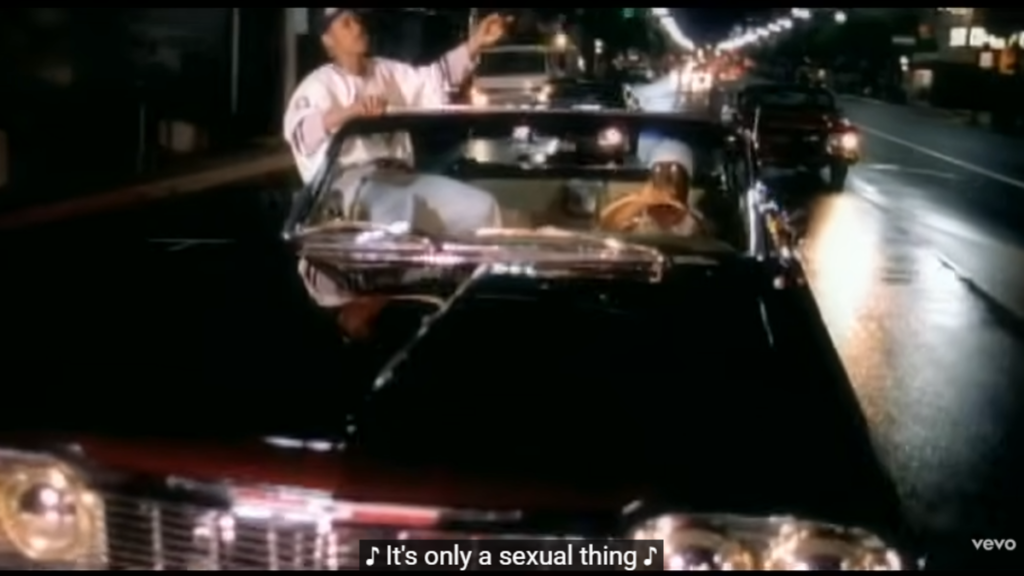
Usher’s 1994 video, “Can U Get Wit It,” directed by Lionel C. Martin was shot in either Las Vegas or Los Angeles using Keefe D’s convertible vehicle.

As tension mounted between Death Row Records, heavily affiliated with the Mob Piru Bloods, and Bad Boy Entertainment throughout 1995, Bad Boy’s reliance on the South Side Compton Crips for security deepened. What began as a standard corporate security arrangement gradually evolved into a factional alliance inside a volatile bi-coastal rivalry.
The Proffer Tapes and Law Enforcement Records
For years, law enforcement agencies in Los Angeles and Las Vegas tracked the overlap between rival record labels and local gang factions. The nature of the relationship between Bad Boy and the South Side Crips became a focal point of investigative scrutiny following the deaths of both Tupac Shakur in 1996 and Christopher “The Notorious B.I.G.” Wallace in 1997.
In December 2008, under a joint federal and local proffer agreement, a legal arrangement providing limited immunity for truthful information, Keefe D sat down with task force investigators. During these recorded sessions, Davis detailed his decades-long history with Bad Boy Entertainment, alleging that the dynamic shifted from routine security services to conversations regarding active conflict with Death Row Records.
Sean Combs has repeatedly, categorically, and publicly denied any involvement in the shooting of Tupac Shakur or any illegal activity involving gang factions, dismissing all such claims as completely false, uncorroborated, and fabricated by individuals seeking legal leniency or media attention.
The Intersection of Street Networks and Corporate Rap
Understanding the role of Keefe D and the South Side Compton Crips in the mid-1990s provides vital context to the events of September 7, 1996. The altercation in the MGM Grand lobby between Tupac Shakur and Orlando Anderson was not an isolated incident; it was an explosive point of contact between two deeply entrenched, opposing ecosystems.
When Death Row affiliates aligned with the Mob Piru Bloods and Bad Boy relied on the South Side Compton Crips for West Coast security, the corporate rivalry between two record labels became inextricably bound to active gang rivalries in Southern California.
When Orlando Anderson returned to his uncle Keefe D after the lobby beating, he wasn’t just seeking family support—he was reporting an assault to the leadership of a faction that was already positioned on the front lines of rap’s most dangerous conflict.
Part 3 of “30 Years Later: The Don Killuminati and 7 Theories to His Death” continues tomorrow, stepping back to the early 1990s to examine the early brotherhood between Tupac Shakur and Sean Combs—before studio ambushes and coastal rivalries severed their ties.
Part 2 of “30 Years Later: The Don Killuminati and 7 Theories to His Death” continues tomorrow, stepping back to the early 1990s to examine the early brotherhood between Tupac Shakur and Sean Combs—before studio ambushes and coastal rivalries severed their ties.
Catch up on the series:
Read Part 1: The Icon, the MGM Grand Beatdown, and the Heat at Flamingo & Koval