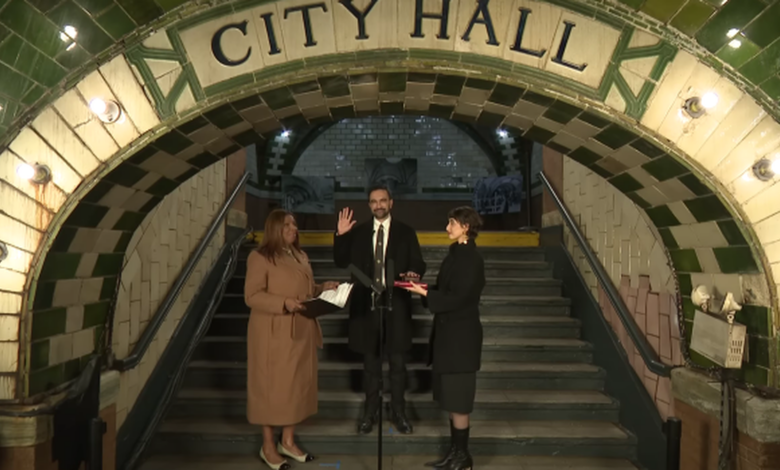
In abandoned subway station, Zohran Mamdani ushers in a transit-focused era as New York City’s 112th mayor on New Year’s night
New York City welcomed a era of leadership in the first minutes of 2026, as Zohran Kwame Mamdani was sworn in as the city’s 112th mayor at the historic Old City Hall subway station just after midnight on New Year’s Day.
New Year, New Mayor
Under the vaulted, tiled arches of the long-closed Old City Hall station, New York State Attorney General Letitia James administered the oath of office, officially making Mamdani mayor as the countdown clock struck the new year. The intimate, after-midnight ceremony symbolically tied the city’s future to the transit system that keeps it moving, turning an abandoned showpiece of the early subway era into the launchpad for a new administration.
Mamdani, 34, enters office as New York City’s first Muslim and South Asian mayor, and its youngest leader in more than a century, after a shock, affordability-focused campaign that resonated with over two million voters. Framing the moment as “the honor and the privilege of a lifetime,” he pledged to uphold the U.S. and New York State constitutions and the city charter with his hand on a Quran, underscoring the historic nature of his swearing-in.
A Subway Station As a Statement
Choosing Old City Hall station—decommissioned since 1945 and usually only accessible via special tours—was more than a picturesque backdrop; it was a deliberate political message. Built in 1904 as one of the original 28 subway stops and long celebrated for its Guastavino-tiled arches and chandeliers, the station represents, in Mamdani’s own words, a city that “dared to be both beautiful and build great things that would transform working people’s lives.”
In brief remarks after taking the oath, Mamdani called the station “a testament to the importance of public transit to the vitality, the health, and the legacy of our city,” linking New York’s next chapter to its trains, tunnels, and buses. The subterranean setting also nodded to Mamdani’s own political narrative: a once-little-known state lawmaker who rode a wave of populist energy and social-media savvy into the most visible office in America’s largest city.
First Move: A Transit-Focused Administration
If there was any doubt about what this new mayor wants to be judged on, his first official decision tried to settle it: on the platform, moments after his oath, Mamdani introduced Mike Flynn as his incoming Department of Transportation commissioner. Calling Flynn “experienced” and “ambitious and imaginative towards the landscape as it could be,” Mamdani cast the appointment as the opening move in an administration that intends to make New York’s streets and transit “the envy of the world.”
Flynn, a veteran of city transportation planning and a former senior DOT official, brings more than two decades of experience in capital planning, street redesign, and transit projects, including work on the city’s first Street Design Manual. In his own short remarks at the ceremony, Flynn described the role as “the job of a lifetime,” promising to “hit the ground running” and deliver “safer streets and faster buses” for working New Yorkers.
A Progressive Mandate On Affordability
Mamdani’s midnight oath capped a meteoric rise powered by a bold progressive agenda centered on affordability in a city where rents and daily costs have pushed residents to the brink. On the campaign trail, he championed policies such as rent freezes, free buses, and expanded childcare as part of a broader promise to reorient City Hall around the needs of renters, straphangers, and working families.
That message helped him secure roughly half of the citywide vote in a crowded field, overcoming skepticism from the political establishment and setting expectations—both hopeful and anxious—about how far he will go once in office. For supporters, the image of Mamdani beneath Old City Hall’s arches, Quran under his hand and the echo of trains just beyond the sealed platforms, signaled a reset: a mayor who wants the city’s infrastructure, and its politics, to work again for everyday New Yorkers.
From Underground Oath To Citywide Test
The underground ceremony was only the first act; a larger, public inauguration on the steps of City Hall—featuring national progressive figures like Bernie Sanders and Alexandria Ocasio-Cortez—was scheduled to follow later in the day. Together, the two events stitched Mamdani’s story to both the literal foundations of New York’s transit network and the broad, aboveground coalition that propelled him into power.
For New Yorkers watching on New Year’s night, the symbolism was hard to miss: a new mayor taking office in the liminal space between years, in a hidden station that once embodied the city’s faith in public works. Whether “New Year, New Mayor” becomes more than a headline will depend on what comes next—on buses that move, rents that stabilize, streets that feel safer, and a City Hall that proves it remembers who depends on the system beneath their feet.