


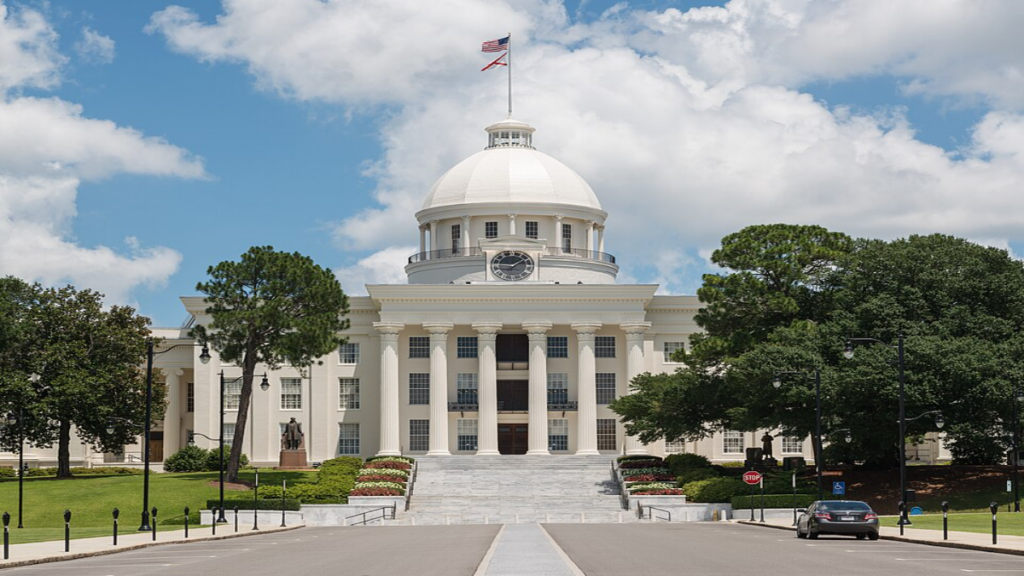
Three-Judge Panel Intervenes to Protect Majority-Black Districts Ahead of Midterms
BIRMINGHAM, AL — In a major voting rights development, a federal three-judge panel on Tuesday blocked Alabama from using a Republican-backed congressional map for the upcoming midterm elections, ruling that the plan was intentionally drawn to discriminate against Black voters.
The sweeping 102-page order issues a preliminary injunction that prevents state officials from switching to a 2023 legislatively enacted map. Instead, the court ordered Alabama to continue utilizing a remedial, court-drawn map featuring two majority-Black districts—the same boundaries used during the 2024 election cycle.
“Ultimately, we cannot see our way clear to requiring Alabamians to cast their votes in the 2026 elections under a districting plan tainted by intentional race-based discrimination,” the judicial panel wrote in its decision.
A “Calculated, Purposeful Decision” to Dilute Votes
The judicial panel—composed of U.S. Circuit Judge Stanley Marcus and U.S. District Judges Anna Manasco and Terry Moorer—shattered the state’s defense that the district boundaries were motivated strictly by partisan politics rather than race.
The court reviewed an extensive record stemming from a multi-year legal battle. Lawmakers originally drew a single majority-Black district following the 2020 Census, which a federal court flagged as a likely violation of the Voting Rights Act. When directed to add a second opportunity district, the GOP-led Legislature passed a 2023 plan that kept only one majority-Black district, slightly adjusting a second district to roughly 40% Black.
The panel found that the Legislature’s 2023 adjustments intentionally employed dilutive mechanisms, such as “cracking” majority-Black communities across multiple districts, to systematically prevent minority voters from electing representatives of their choice. The judges called the 2023 map a “calculated, purposeful decision” to reject the court-mandated remedy.
Navigating the Post-Callais Landscape
The high-stakes ruling serves as an immediate test case for the South’s redistricting landscape following the U.S. Supreme Court’s decision in Louisiana v. Callais. That ruling weakened specific provisions of the Voting Rights Act, sparking a rush by Republican lawmakers across several Southern states to reconfigure congressional boundaries ahead of the fall midterms.
Following the Callais decision, the Supreme Court lifted a prior permanent injunction on Alabama’s 2023 map, prompting Governor Kay Ivey to schedule special primaries for August 11 in four reconfigured districts. However, the high court left the final factual review to the local federal panel.
Upon reviewing the extensive record under the new legal standards, the three-judge panel determined that the evidence of intentional racial discrimination remained undisputed.
Avoiding Electoral Chaos
Beyond the constitutional violations, the judges heavily emphasized the logistical impossibility of altering voting boundaries in the middle of an active election cycle. Alabama voters had already cast ballots in some regional primary contests just last week under the existing court-ordered lines.
State Elections Director Jeff Elrod testified that manually reassigning thousands of voters into the state’s preferred 2023 map at this stage would require a frantic effort that could spark widespread voter confusion. Sticking to the court-selected lines ensures the August special primaries can proceed seamlessly.
The Political Stakes and Next Steps
The decision represents a major procedural victory for voting rights groups, ensuring that representation gains made in 2024—which sent two Black lawmakers from Alabama to the U.S. House simultaneously for the first time in state history—remain protected for the current cycle.
| Entity / Official | Official Stance / Next Action |
| Federal Judicial Panel | Issued a preliminary injunction blocking the state map; ordered 2026 proceedings to remain under the court-approved 2024 lines. |
| Alabama Attorney General Steve Marshall | Expressed disappointment but promised an immediate appeal to the Supreme Court, calling the state lines a “blandly unobjectionable congressional map.” |
| Deuel Ross (NAACP Legal Defense Fund) | Applauded the ruling for again vindicating the constitutional rights of voters throughout the Black Belt. |
| U.S. Rep. Shomari Figures (D-AL) | Welcomed the decision to protect fair maps but noted a long road remains ahead before the legal fight is completely settled. |