


Atlanta filmmaker delivers blueprint for self-determination and resistance in new manifesto

A battle manual for Black survival
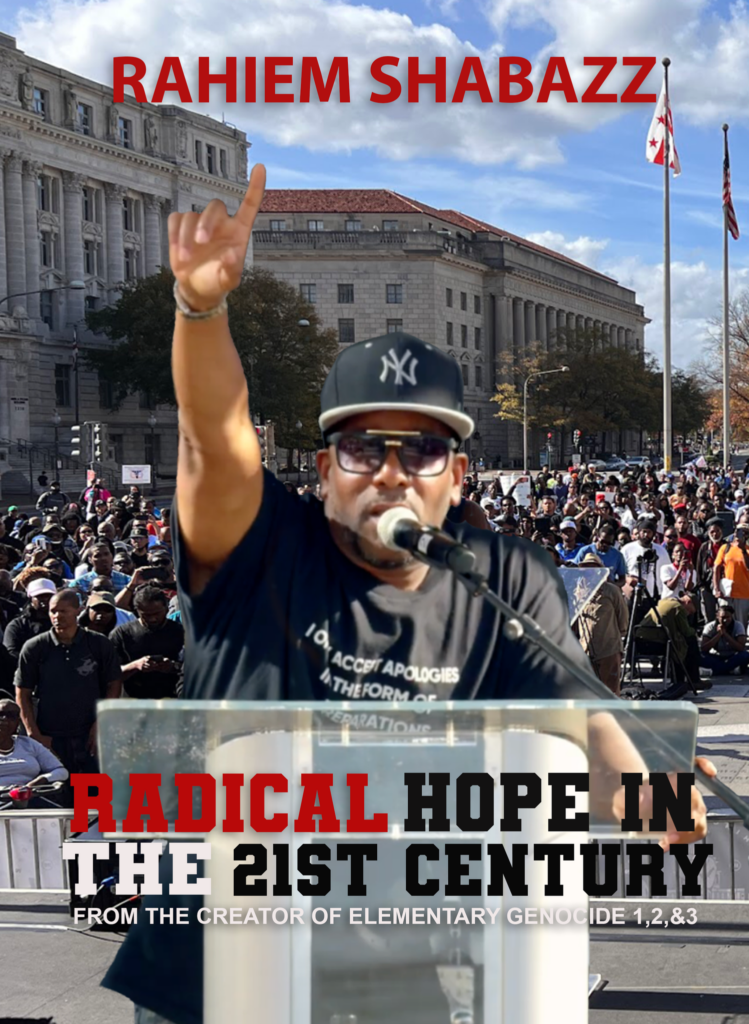
Atlanta-based filmmaker, author, and media creator Rahiem Shabazz describes his new book, Radical Hope in the 21st Century, as “a battle manual for Black survival and Black victory in an age designed to exhaust us,” not a piece of motivational fluff or detached academic theory. The book, he explains, is a clear-eyed declaration that Black people are “still here, still thinking, still building, and still refusing to submit to systems that profit from our despair.”
Shabazz says his manifesto was born out of a painful realization: Black suffering has been normalized while symbolic gestures are often sold as progress. “Black people don’t need another apology, hashtag, or hollow reform,” he says, arguing that what is urgently needed is clarity, direction, and a vision rooted in power, self-determination, and collective survival.
Defining radical hope
For Shabazz, hope is not a slogan but “disciplined optimism” grounded in history, struggle, and strategy. Radical hope, as he frames it, is “hope with teeth” – hope that organizes, refuses assimilation, and demands transformation rather than permission.
In everyday life, he says, radical hope looks like disciplined action: rejecting white supremacist narratives about Black worth, choosing self-respect over assimilation, and prioritizing collective advancement over individual escape. It shows up in building Black economic ecosystems, supporting Black businesses, circulating dollars with intention, and prioritizing ownership over consumption, as well as in educating children beyond hostile institutions and sharpening political literacy.
From consciousness to construction
Radical Hope in the 21st Century is structured as both wake-up call and blueprint, moving readers from awareness to action. Shabazz organized the book in the sequence he believes liberation actually unfolds: “first consciousness, then correction, then construction,” with each section building on the last.
In the opening chapter, he wants readers to feel “awake, affirmed, and unfooled,” fully aware of the forces targeting Black life yet grounded in a legacy of resistance and brilliance. By the final chapter, he wants them ready to think strategically, build collectively, protect Black institutions, live with intention, and “stop waiting for permission” in order to practice self-determination.

Extending the “Elementary Genocide” mission
The book grows directly out of Shabazz’s acclaimed “Elementary Genocide” documentary series, which exposed the school-to-prison pipeline and the targeting of Black children. “Elementary Genocide exposed the crime; the book explains the system and maps the escape,” he says, noting that the films showed how Black children are targeted and warehoused, while the book breaks down why it happens, who benefits, and how communities can dismantle it.
Years spent going into prisons, speaking with incarcerated people, and documenting systemic injustice gave the project its urgency and texture. Shabazz says those conversations “stripped away abstraction” and shaped entire chapters with the testimonies of those living under predatory sentencing, miseducation, broken families, and psychological warfare, insisting that the book remain grounded in lived truth rather than theory.
An Atlanta-forged blueprintRooted in Atlanta’s culture of activism, media, and independent filmmaking, Shabazz credits the city with sharpening both the realism and resolve of the book. He describes Atlanta as a place where Black excellence, exploitation, power, politics, and resistance collide in real time, teaching him that symbolism without structure is empty and proximity to power does not equal freedom.
That vantage point fuels his insistence on self-determination, ownership, and community control as core solutions, drawn from what he has seen working on the ground rather than abstract models. The tone, he notes, is unapologetic because Atlanta is a living reminder that Black progress must be protected, not just celebrated.
From awareness to movement
Early feedback from readers, Shabazz says, has been “deeply affirming and unapologetically Black,” with many people telling him the book gives language to what they already felt but could not fully articulate. Educators, parents, and formerly incarcerated readers have told him the work helped reconnect their sense of purpose with concrete action, which he sees as a sign that the book is functioning as both mirror and marching order.
Looking ahead, Shabazz wants Radical Hope in the 21st Century to be remembered as “the line between awareness and action,” complementing his documentaries and podcast by providing a disciplined blueprint. “Years from now,” he says, he hopes it will be clear that Radical Hope helped shift Black people “from reacting to oppression to organizing for power” and contributed to a generation choosing self-determination over mere survival.
Radical Hope In The 21st Century can be purchased online directly at Shabazz’s personal website at: RahiemShabazz.com or at any of your favorite online retails such as Amazon and Barnes & Noble.